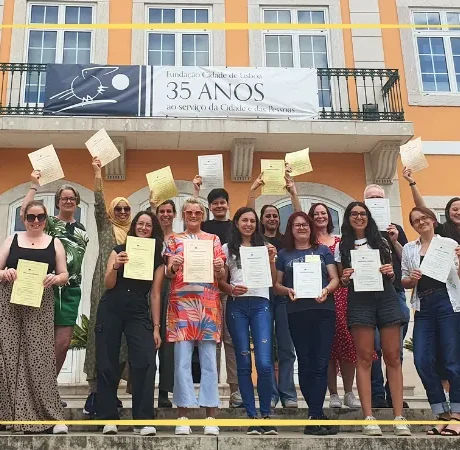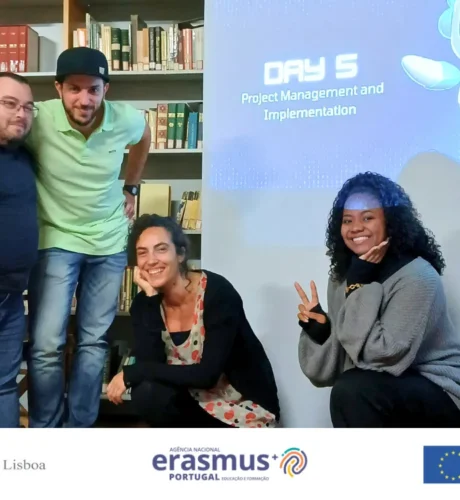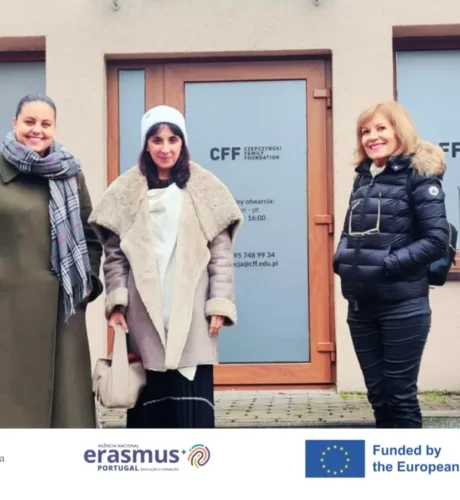
The Lisbon City Foundation (FCL) has recently received accreditation from the Erasmus+ programme in the field of adult education, valid until 2027. This accreditation marks a significant milestone, allowing FCL to promote mobility opportunities within the European Union for both its staff and learners. These mobility opportunities include structured training courses and job shadowing visits.
This new project aligns with FCL’s ongoing internationalisation efforts, initiated with the AprendEU project (2022-2023), and aims to strengthen the training of FCL staff, enhancing the quality of their interventions and the social impact of their actions.
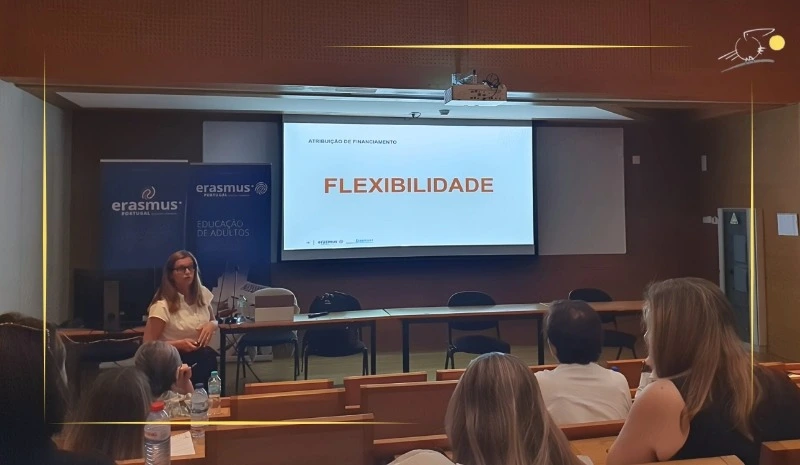
On June 25, the project coordinating team participated in the Kick-off Meeting for KA121 – 2024 | Adult Education Projects, a direct meeting with the National Agency Erasmus+ Adult Education. This event was crucial for obtaining all the necessary information for the effective management of the project.
The FCL accreditation project is structured around four main objectives:
- Empowering for Internationalisation: Establishing international partnerships and promoting peer learning among Europeans.
- Empowering for Social Impact Intervention: Deepening knowledge, improving practices, and developing skills for working in diverse contexts with vulnerable communities.
- Empowering for Digital Transformation: Enhancing the use of digital technologies for teaching, learning, and communication, developing digital skills for all.
- Empowering for Inclusion and Active Participation: Engaging and mobilising learners with fewer opportunities for international mobilities, developing basic skills.
In addition to staff training, the project includes the accompaniment of learning mobilities for learners with fewer opportunities, promoting inclusion and active participation.
With this new accreditation, FCL reaffirms its commitment to establishing international partnerships, fostering learning and skill development among its staff and learners, and continuing its mission of quality social and educational intervention.