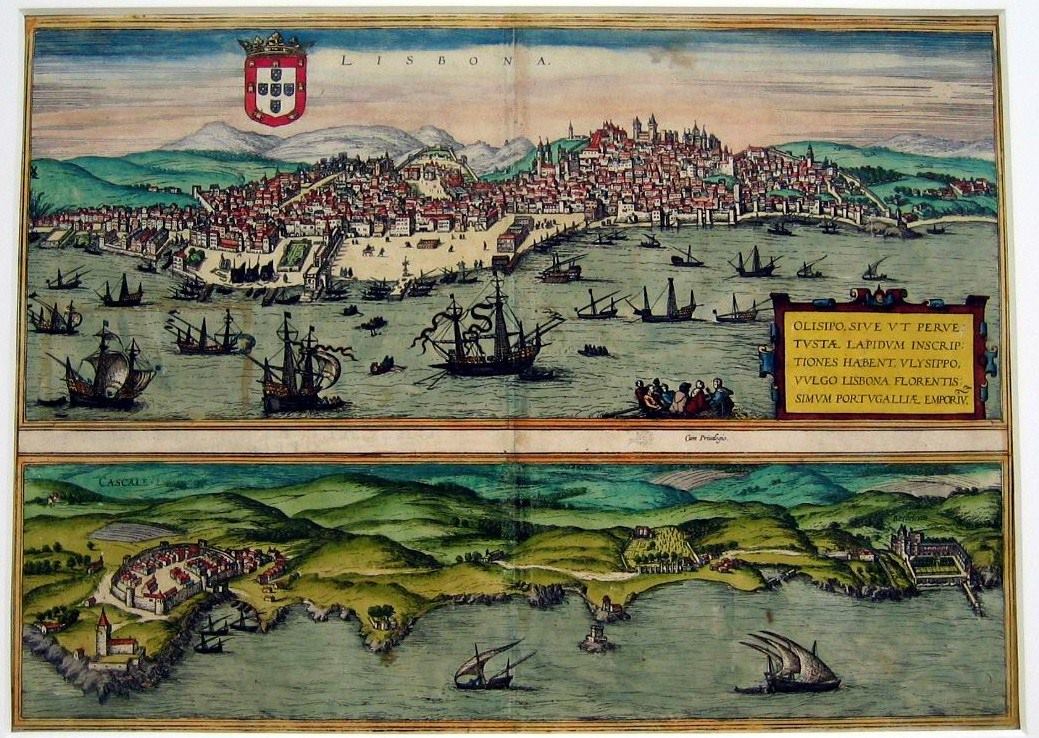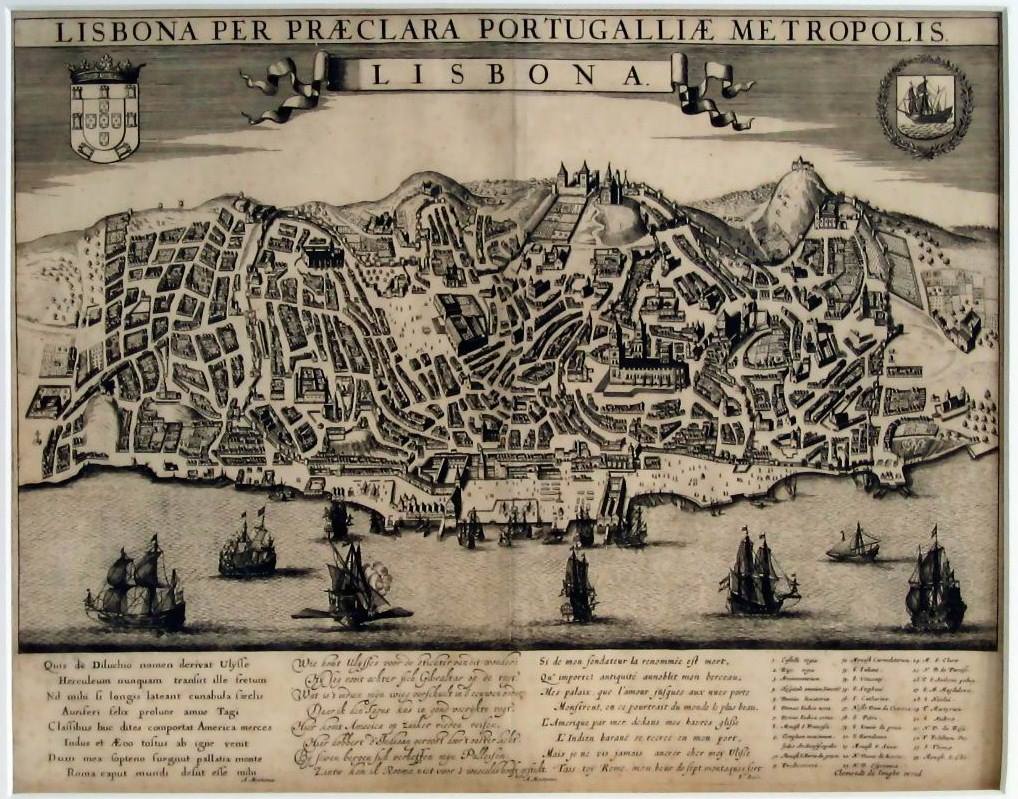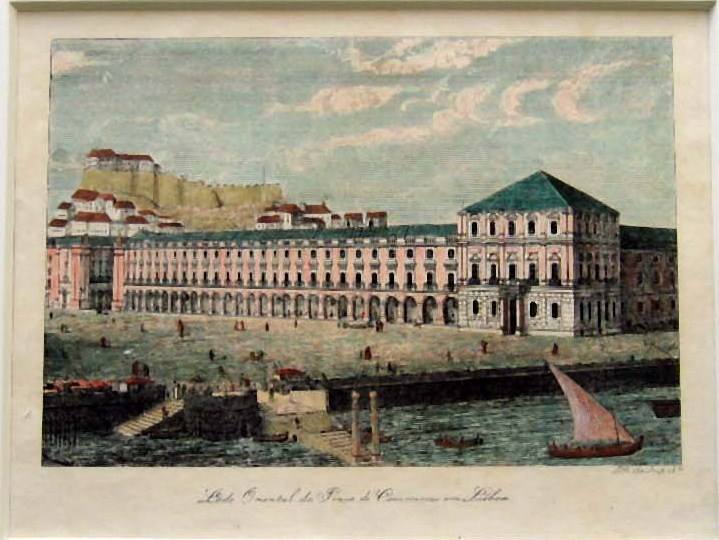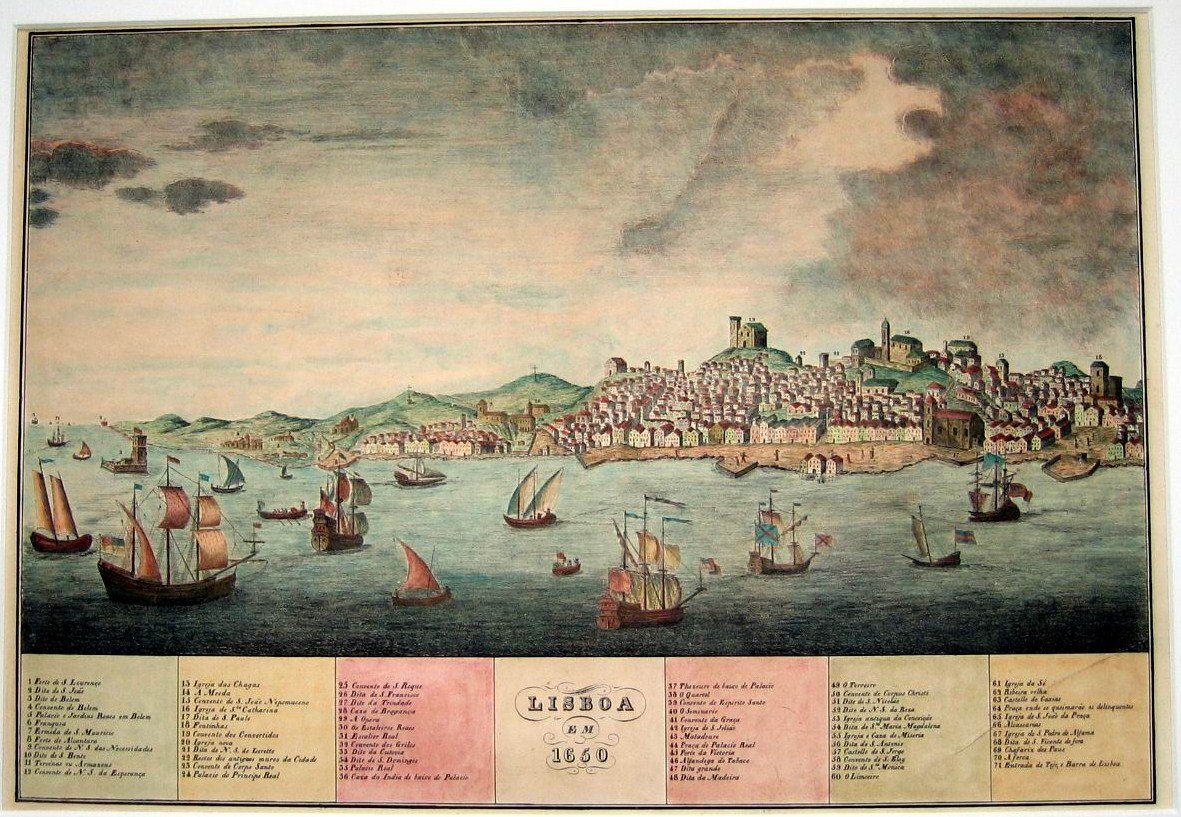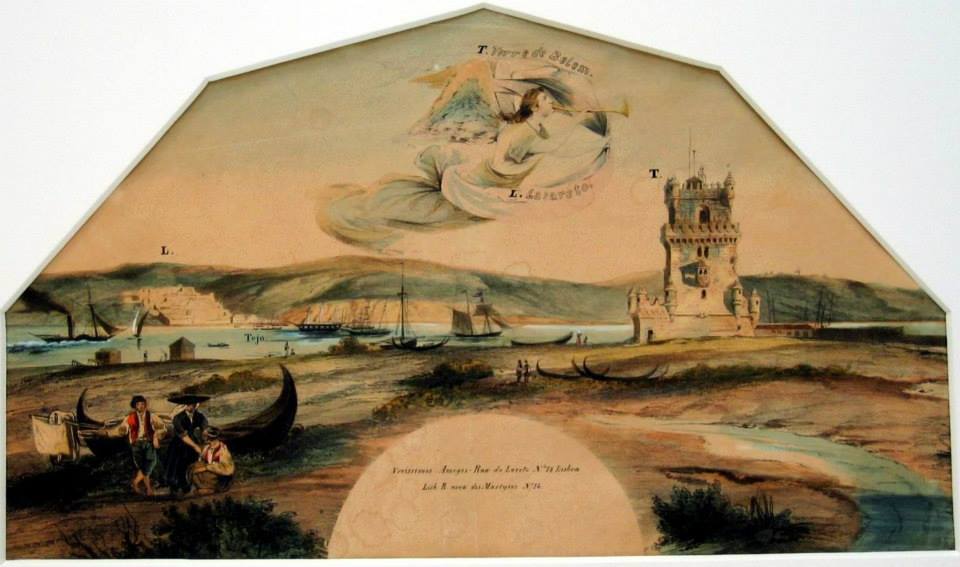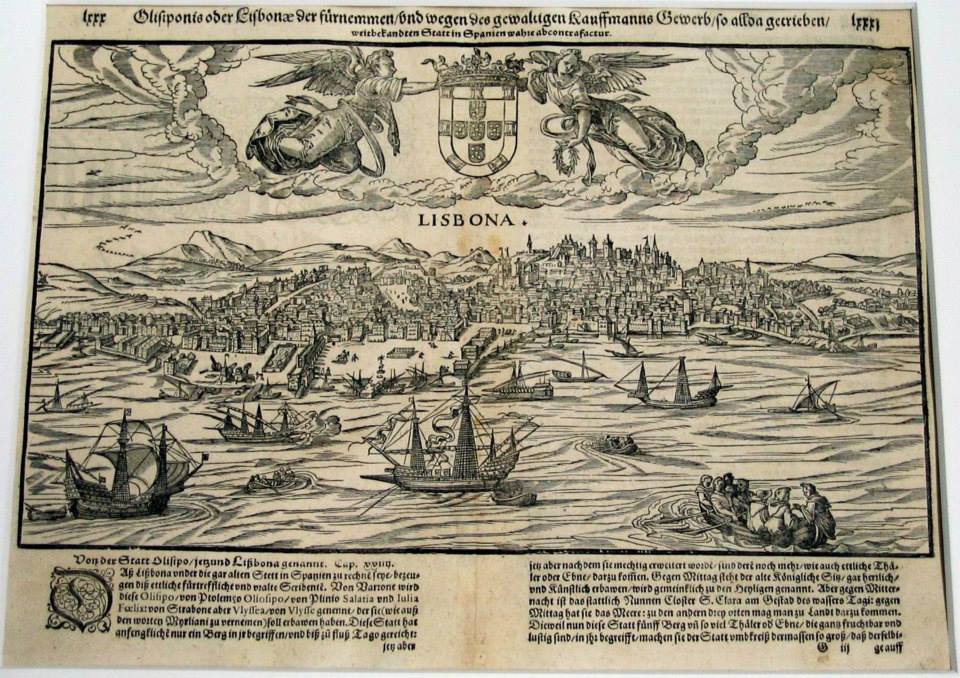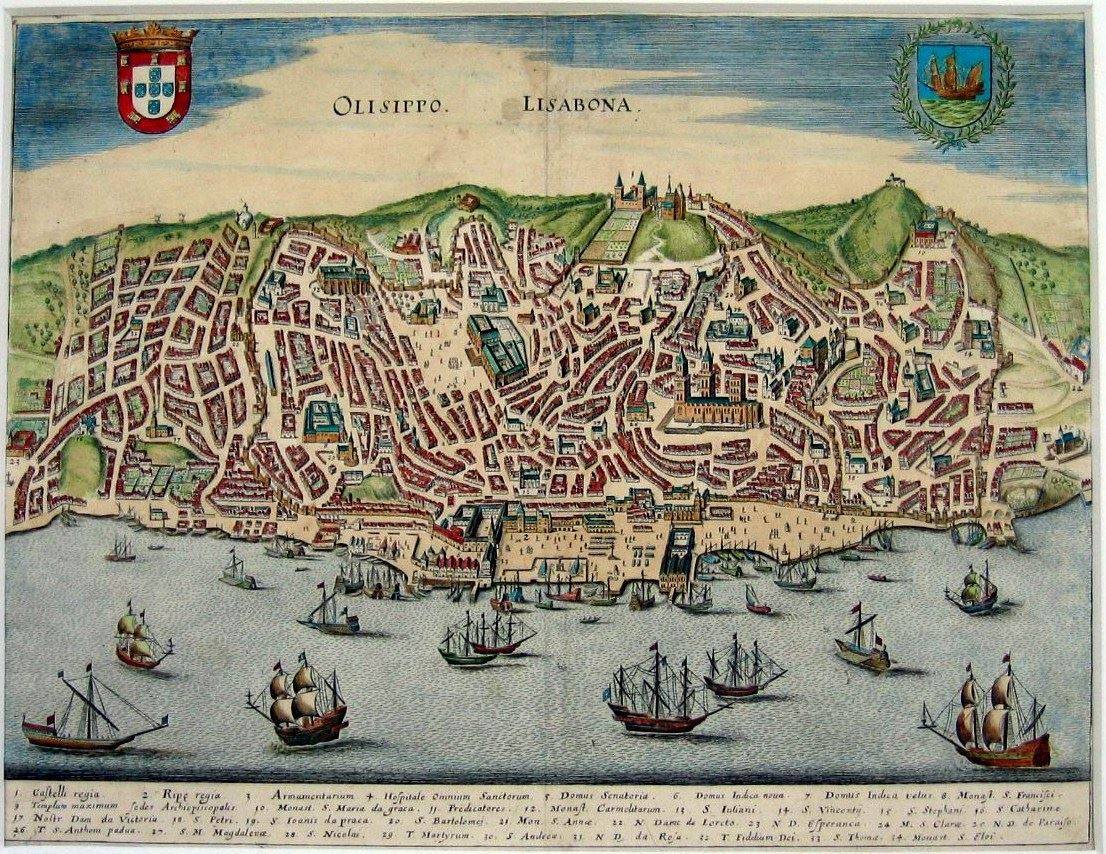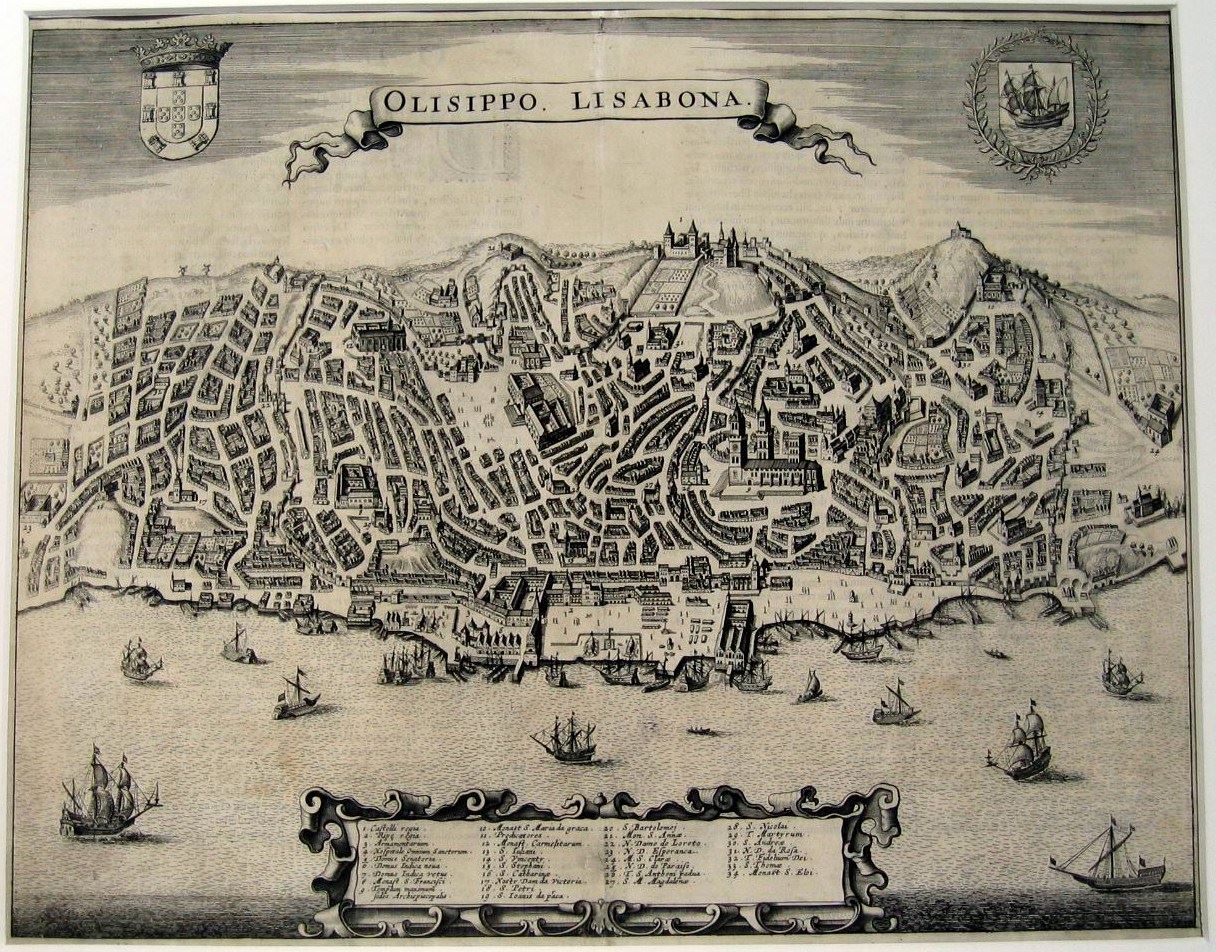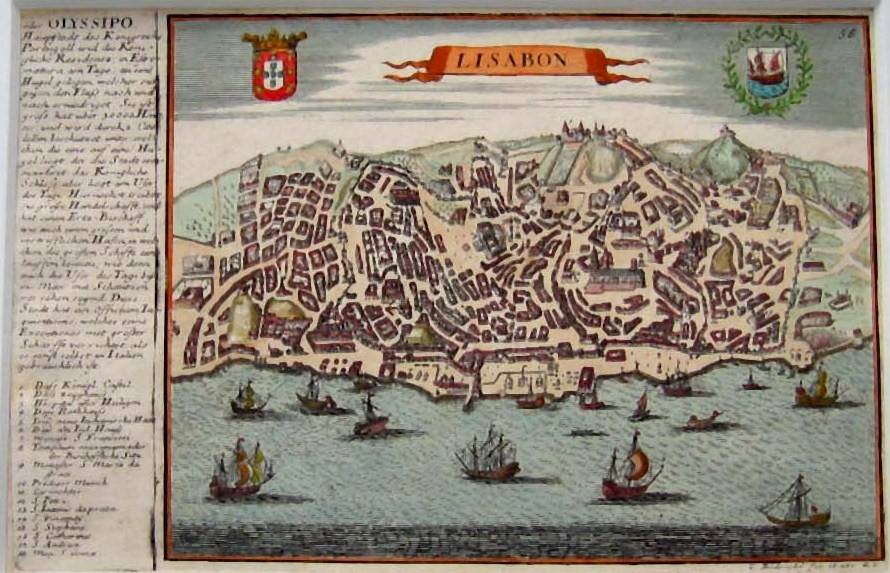
Over the course of many years, the Fundação Cidade de Lisboa has meticulously assembled, through various auctions, a distinguished collection of rare engravings depicting the city of Lisbon. These works typically offer a vista from the River Tagus, featuring meticulously rendered townhouses, streets, and squares, alongside various types of vessels anchored in the river.
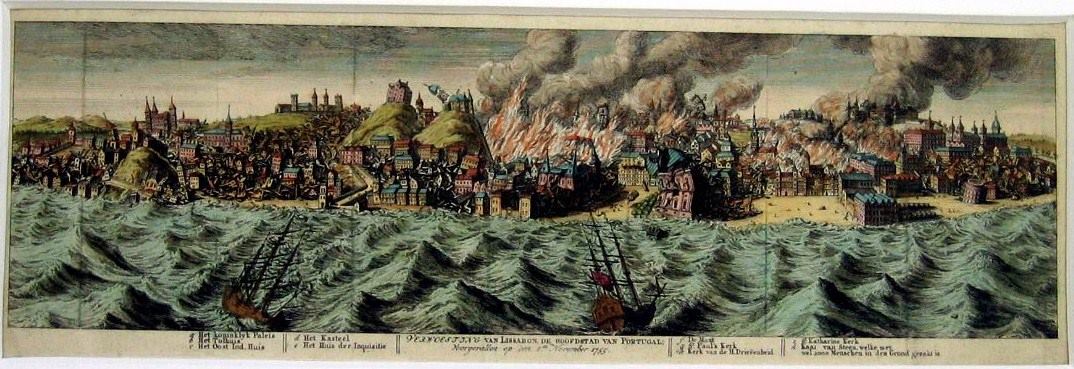
Included within this archival heritage are sixteenth, seventeenth, and eighteenth-century representations predating the Great Earthquake. These plates depict, in exhaustive detail, all the most notable streets, squares, and edifices that existed prior to the cataclysm of 1755. Others illustrate the catastrophe that devastated the city, most notably a magnificent hand-coloured copperplate engraving portraying the destruction of Lisbon during the 1755 earthquake. This piece depicts the city engulfed in flames with buildings collapsing, while the foreground reveals the river with towering waves and three vessels, one of which is foundering. The work is accompanied by a key referencing the most significant landmarks.