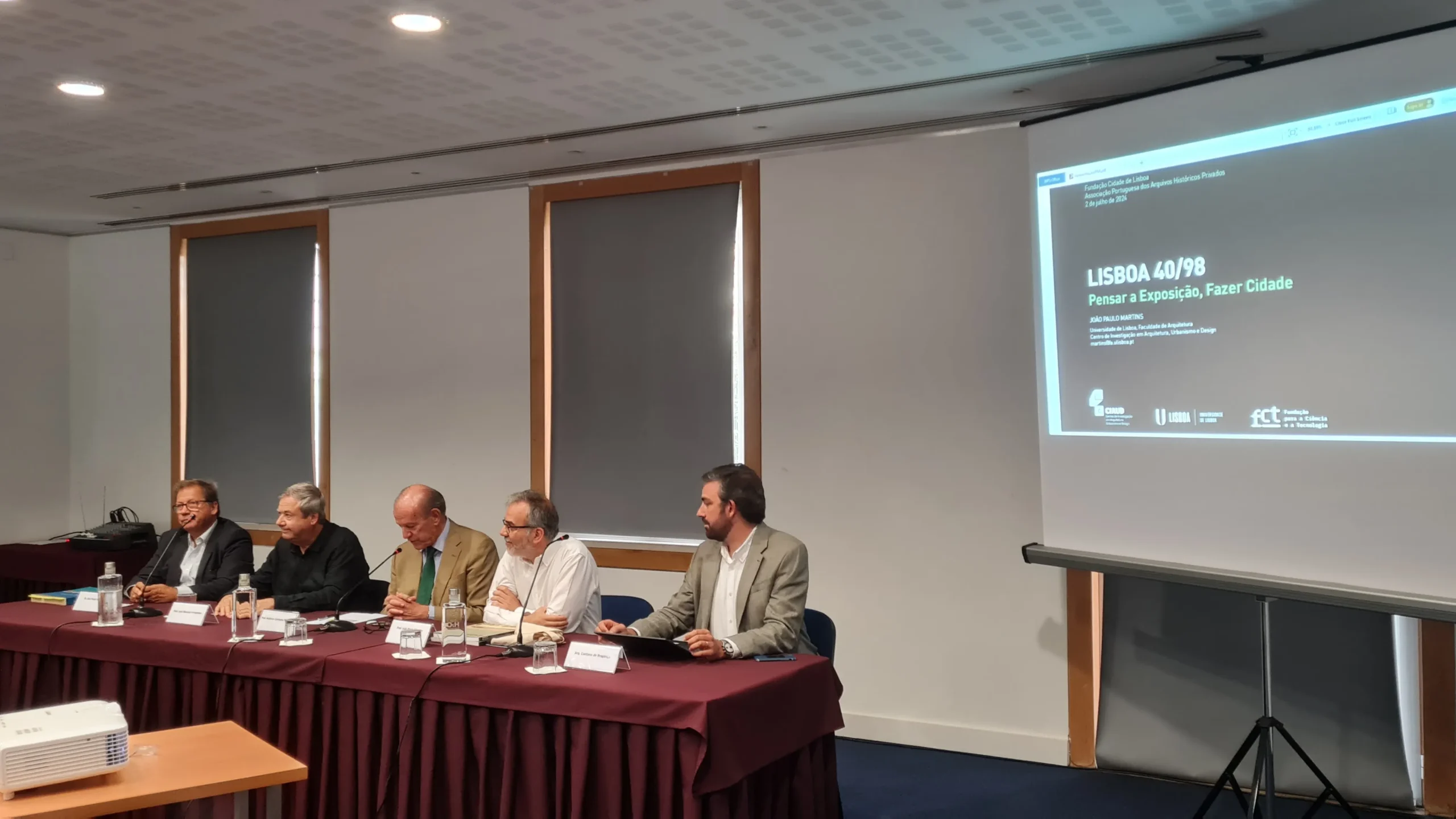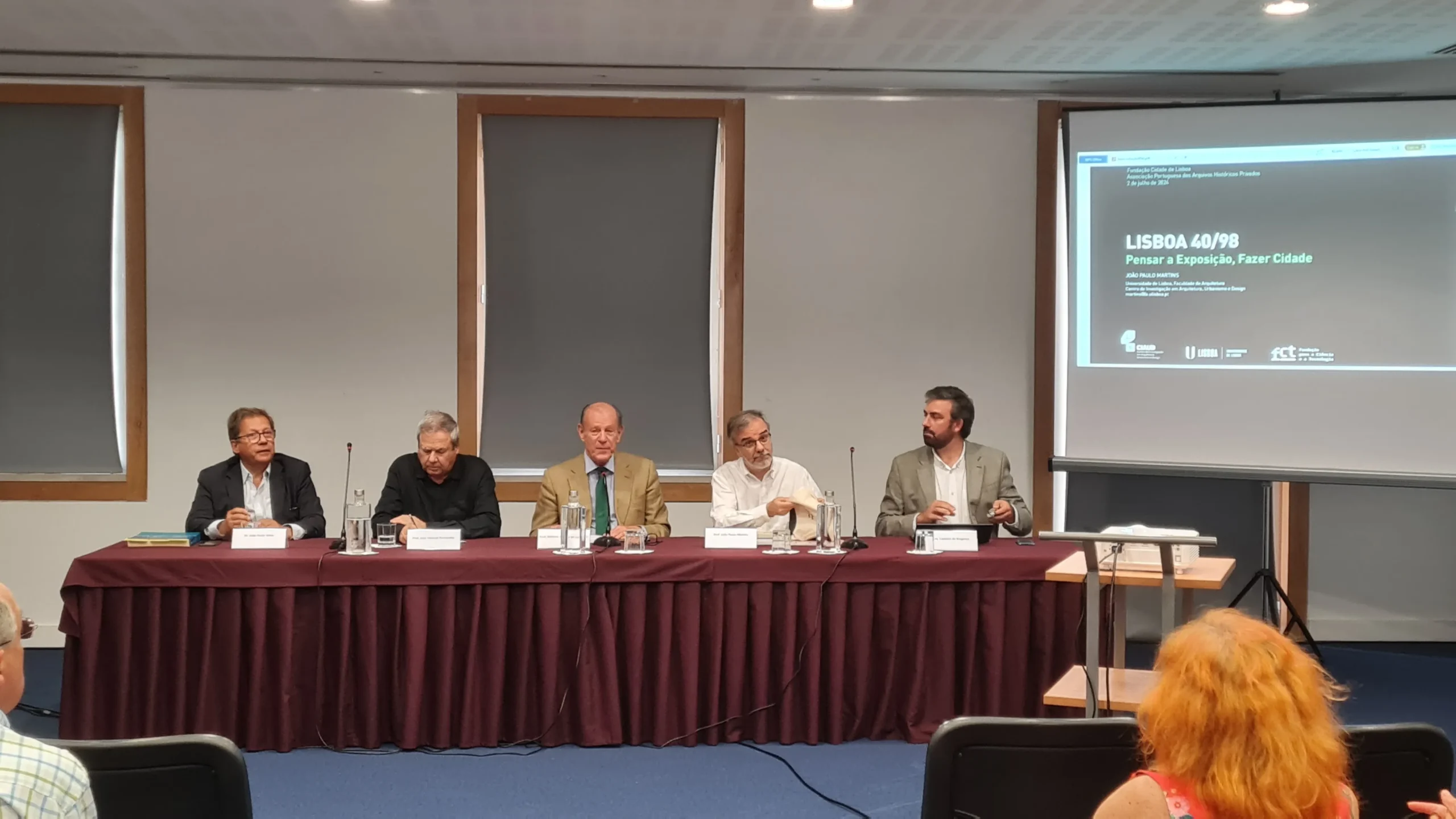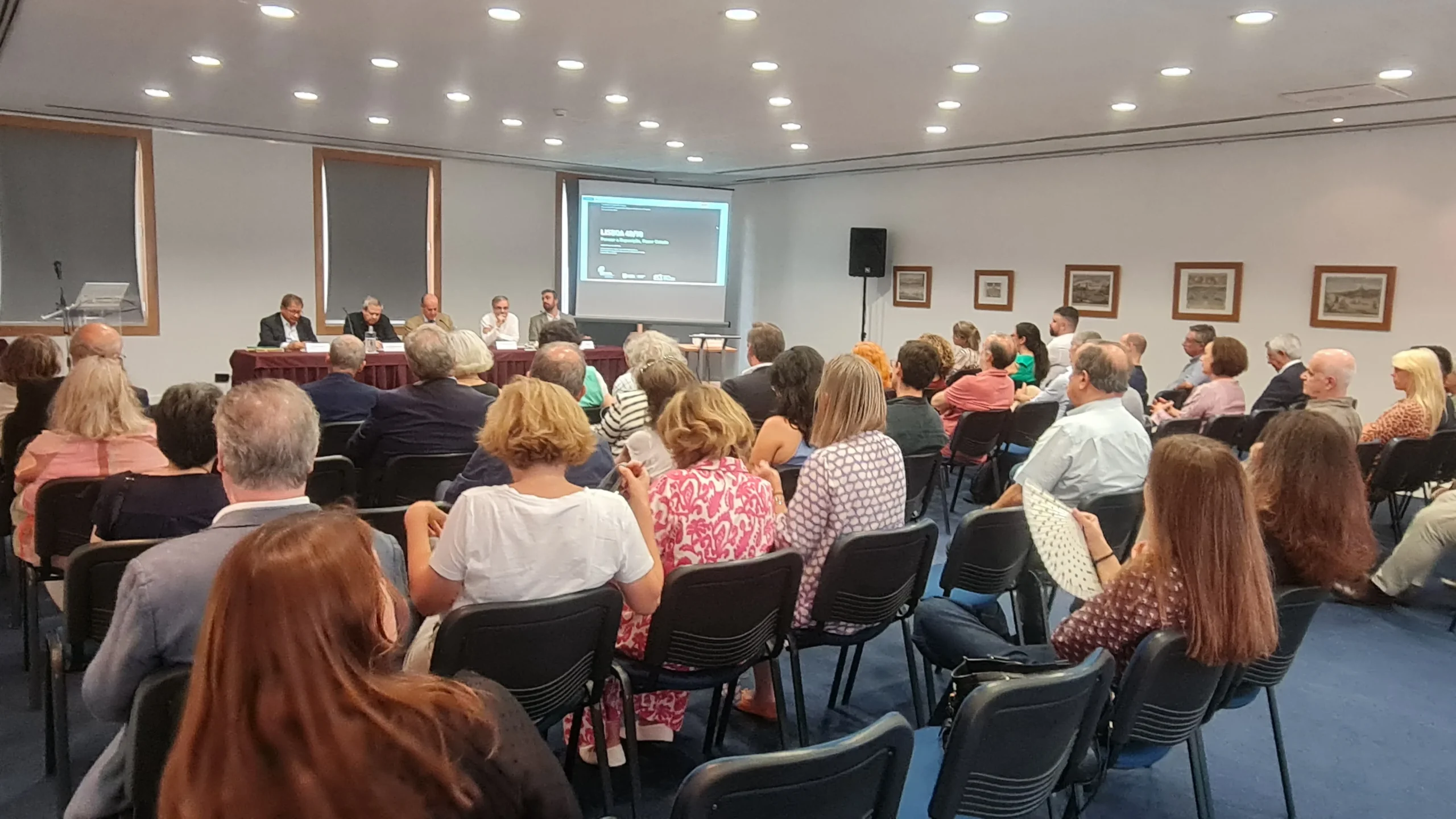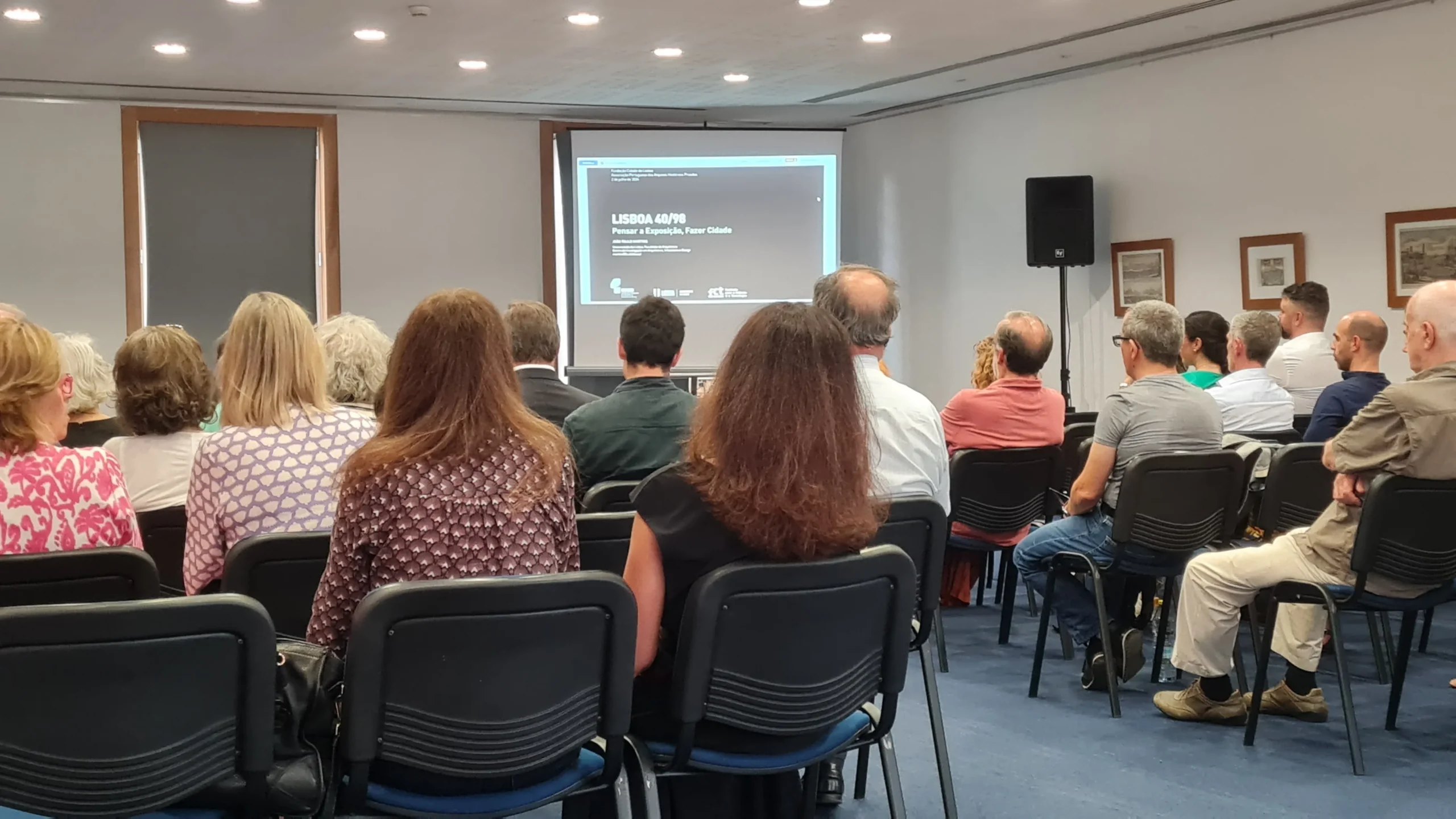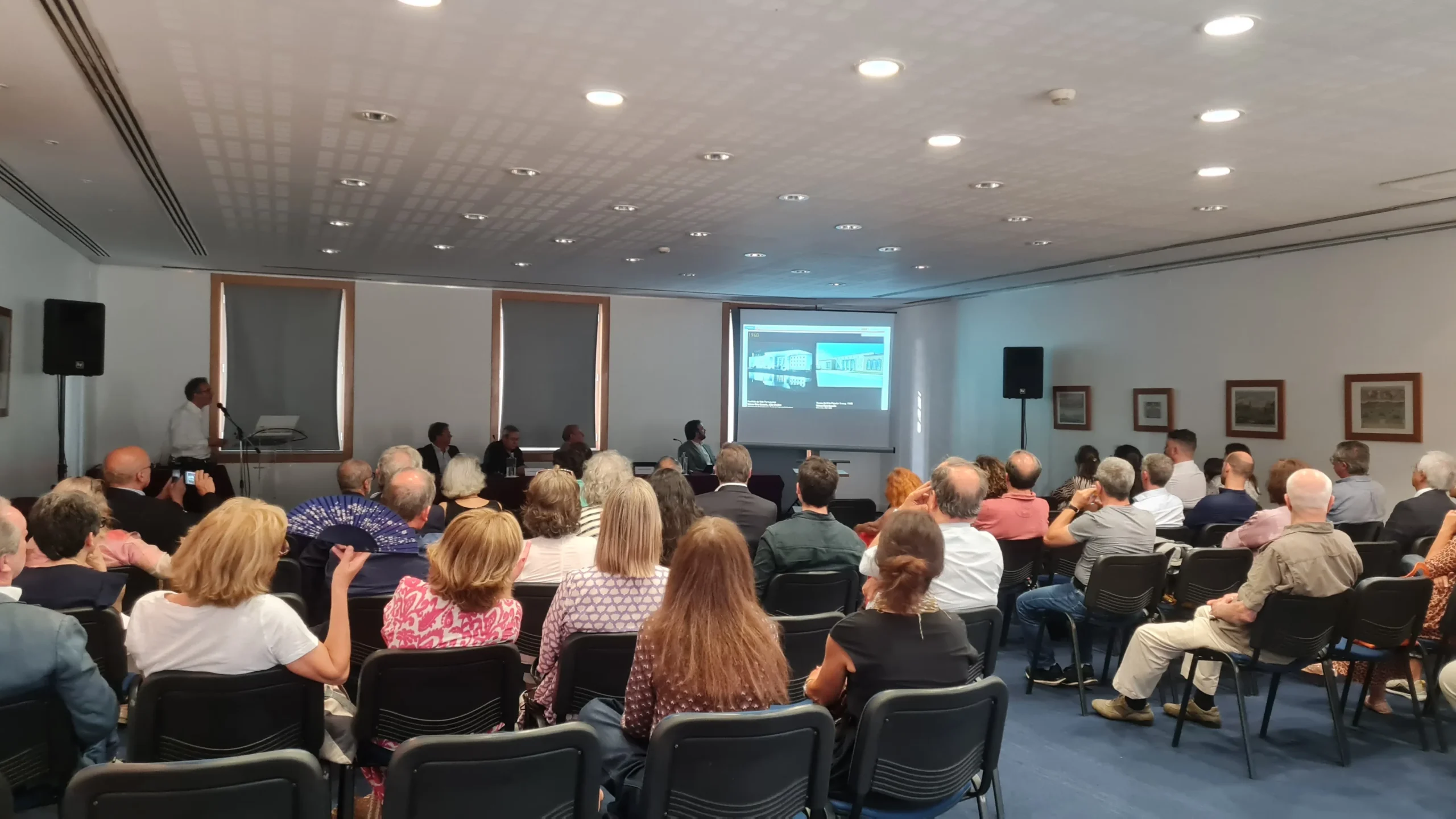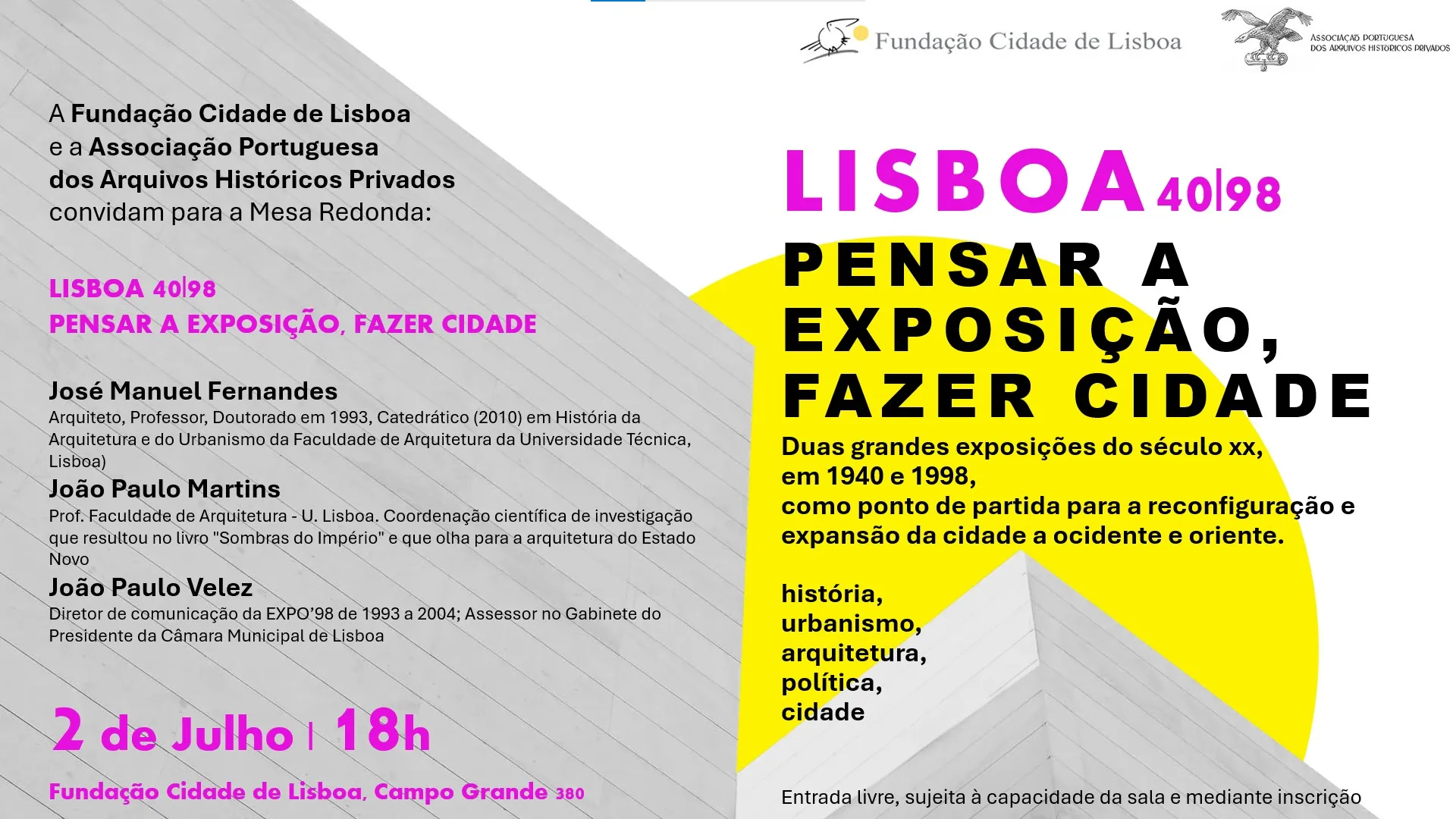
Co-organised with the Portuguese Association of Private Historical Archives, this round table took place on 27 July, with the participation of José Manuel Fernandes, Professor of Architectural History, João Paulo Martins, Professor at the Faculty of Architecture of the University of Lisbon, and João Paulo Velez, Director of Communication at Expo-98.
This debate reflected on how the two major exhibitions of the 20th century – in 1940 and 1998 – were a starting point for the reconfiguration and expansion of the city to the west and east. Based on an analysis of the 1940 Exhibition, which was the great showcase of the 20th century in terms of the Portuguese empire and took place on the western side of the city, a parallel was drawn with Expo-98, which extended along the eastern side, with the theme of the Oceans. The common and contrasting elements were analysed, affirming the 1940 exhibition as an internal exhibition, for the Portuguese world, while the latter was an exhibition open to the world, where a complete, balanced urban centre with a sense of the future was defined. The first exhibition focused on monumentality, while the second turned to modernity.
The role of architects, engineers and designers was relevant in both, with spaces in the west and east of the city also being recovered, with a major impact on the capital.
The exhibition was organised by the Portuguese Institute of Architecture and the Portuguese Institute of Urbanism.