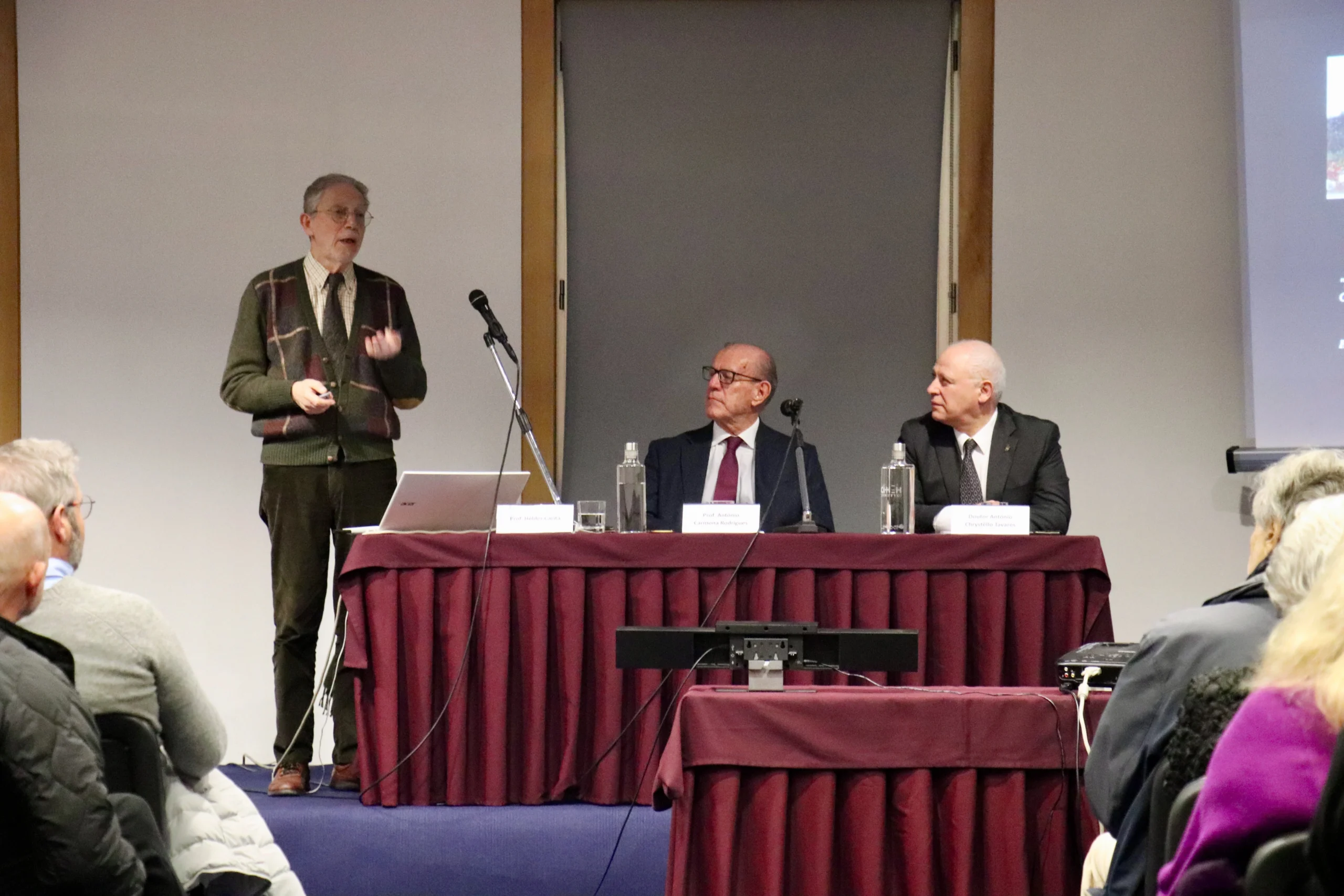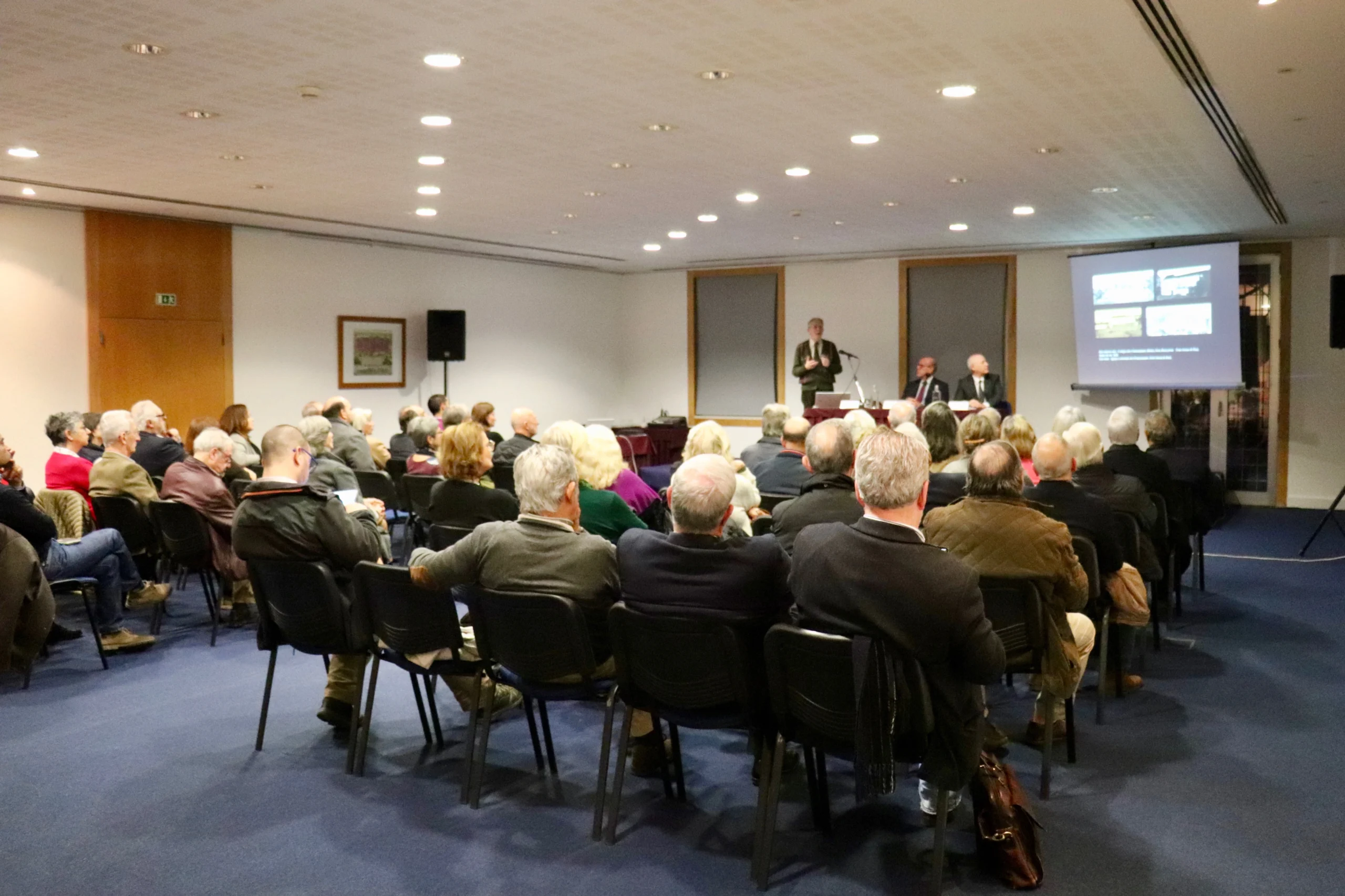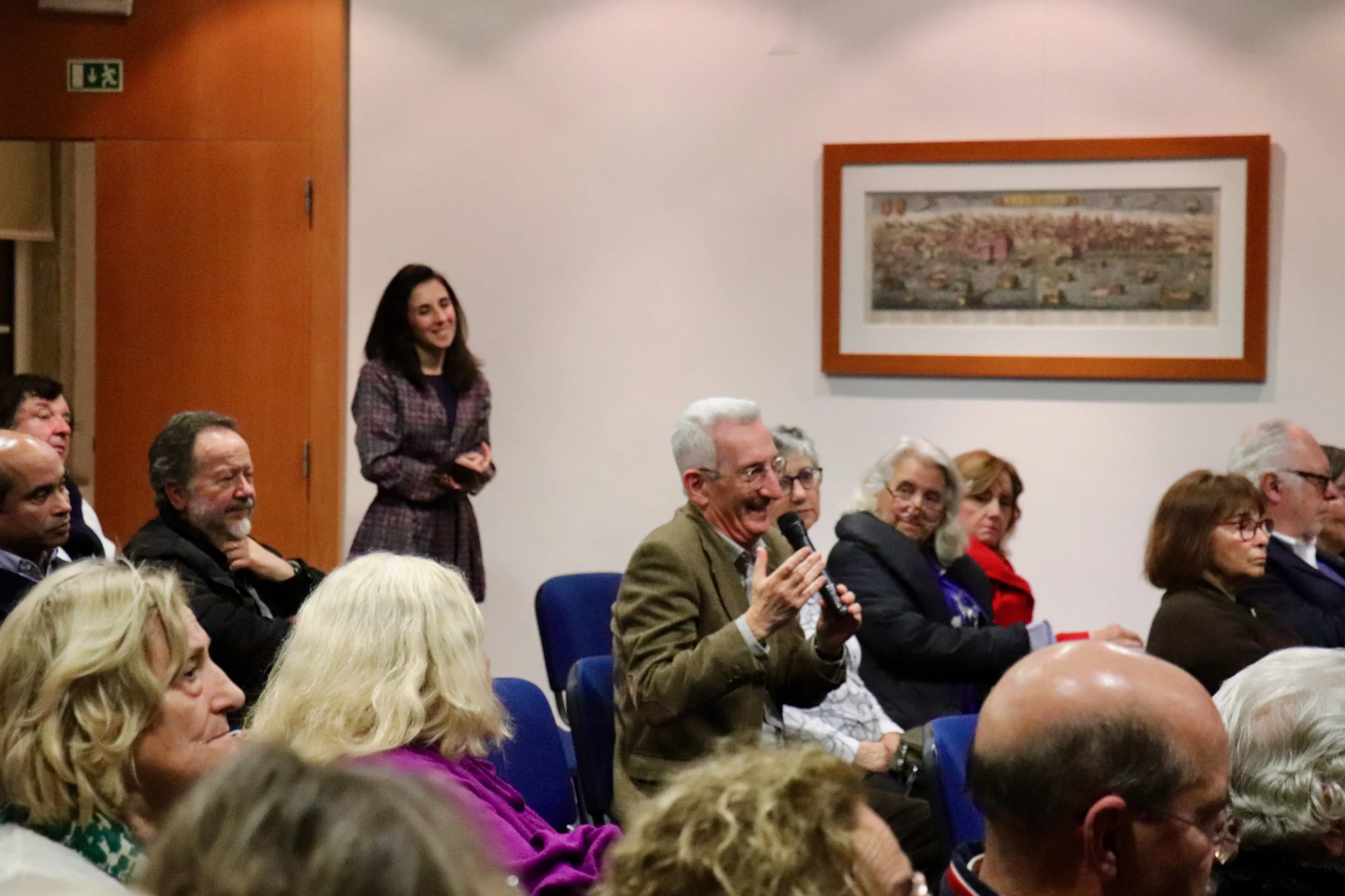
No âmbito do Ciclo Poentes Olisiponenses, iniciou-se com a reflexão sobre a tradição das adufas e janelas carepas, que começa em Lisboa e se estende a outros territórios além-mar, com especial preponderância em Goa, apresentada pelo Prof. Hélder Carita no dia 24 de Janeiro de 2024.
As janelas de carepas, como são denominadas em Goa, caracterizam-se pelo uso de pequenas placas de ostra substituindo o vidro. Antes deste se tornar acessível em Goa, recorria-se ao uso das placas de ostra para proteger os ambientes do excesAs part of the Ciclo Poentes Olisiponenses (Olisiponense Sunsets Cycle), Prof. Hélder Carita began with a reflection on the tradition of adufas and carepas windows, which began in Lisbon and spread to other overseas territories, particularly Goa, on 24 January 2024.
Carepas windows, as they are called in Goa, are characterised by the use of small oyster shells instead of glass. Before glass became available in Goa, oyster shells were used to protect rooms from excessive light, and the way the carepas were arranged allowed air to circulate freely between the interior and exterior. Considered a hallmark of Goan architecture, they are a fundamental element in characterising the identity of Indo-Portuguese architecture. Unparalleled throughout the Indian subcontinent, these windows combine influences from Lisbon that extend from Goa to Macau, bearing witness to a strong cultural exchange in their delicate lines and marked exoticism. so de luminosidade, onde o próprio processo de disposição das carepas permitia a livre circulação de ar entre o interior e o exterior. Consideradas um ex-líbris da arquitetura goesa, constituem um elemento fundamental para a caracterização da identidade da arquitetura indo-portuguesa. Sem paralelo em toda a península hindustânica, estas janelas cruzam influências que de Lisboa se estendem de Goa a Macau testemunhando na delicadeza de linhas e marcado exotismo um forte intercâmbio cultural.